
Regular readers of this blog may occasionally have picked up on the feeling that midsummer isn’t our favourite time of year. And, right enough, it’s a season that is full of ambiguities. Everything is growing, or breeding, or visiting – and cutting, counting or just generally managing all this means you often don’t have the time to enjoy what can otherwise be a really rewarding time of year. The weather hasn’t been great either, which has even meant we can’t do things like run the moth trap of a night to see what’s out there. But it improved, however briefly, in time for our moth morning on Wednesday.
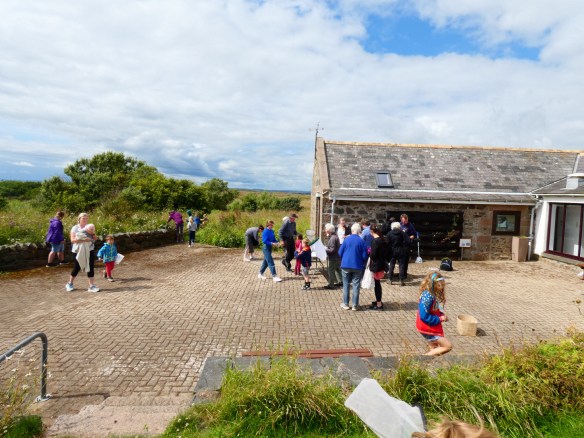
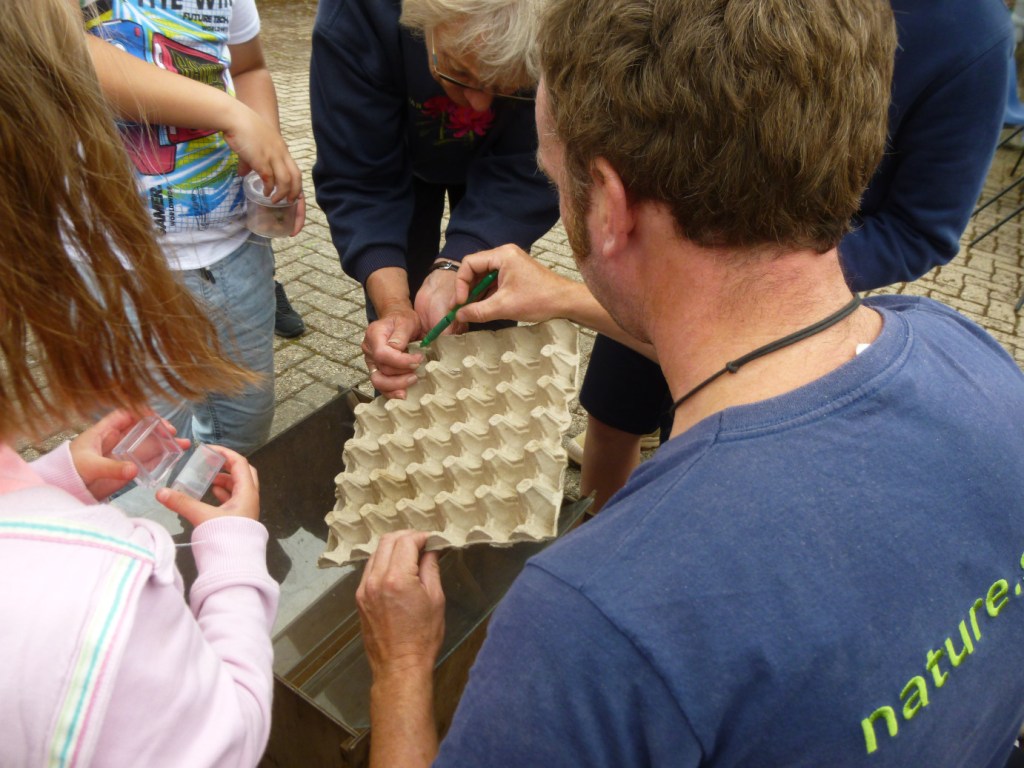
We weren’t too optimistic the previous evening, as we went about setting the traps in the pouring rain. But when the morning came, what a haul of moths we had! Admittedly, some are hard to tell apart – which is why we had Helen from Aberdeenshire Council Ranger Service with us, as our local expert – thanks Helen, we couldn’t do it without you!
It’s amazing how easy it is to overlook moths – not least because most of them fly at night – but they are vital to our ecosystem. They probably are more important pollinators than even bees, and many are easily as beautiful as butterflies. So how can we find out what’s out there?
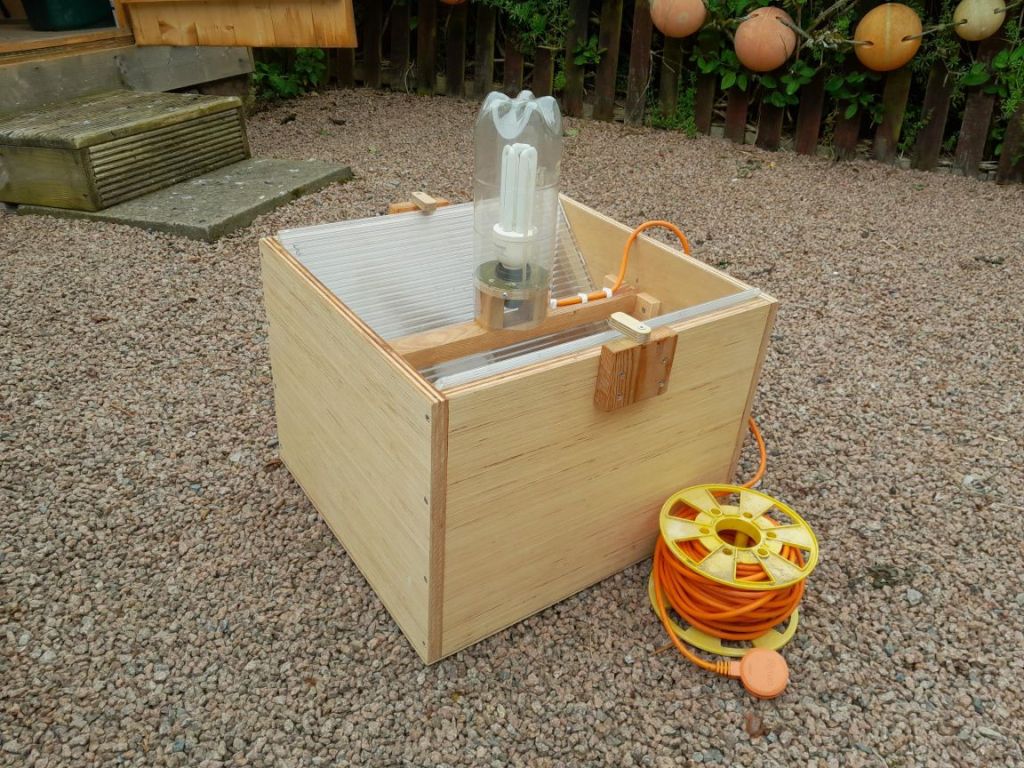
One of the easiest ways for us to come into contact with night-flying moths is by the use of a light trap. This is a simple device comprising a light source mounted on top of a catching-box with a funnelled entrance, rather like a lobster-creel. The moths are attracted by the light, bump into the plastic cover over the lamp, and drop into the box through the funnel. The catching-box is filled with old cardboard egg-boxes, where the moths can safely go to roost until the trap is opened and inspected the following morning. Best of all, the trap does its work while we’re safely tucked up in our beds, meaning we don’t have to stay up all night to see the moths. What’s not to like?
The light trap doesn’t harm the moths in any way, and once they’ve been inspected, identified and logged, they are released back into the environment to continue with their lives. Record-keeping is important, because it means that through our moth-trapping activities, we can contribute to scientific knowledge and thus nature conservation. Here at Forvie, all our moth records contribute to the impressive archive held by the North-east Scotland Biological Records Centre (NESBREC).
Equally importantly, moth-trapping is a huge amount of fun. Each time we run the trap, the next morning is like a childhood Christmas Day. The trap is like an unopened present, and there’s the excitement of not knowing what’s going to be in there, added to the possibility of seeing new, exciting and beautiful species. And you never stop learning and discovering.
One of the commonest moths – and most easily recognised – is the Garden Tiger. With its black and white upperwings and red underwings, this is an unmistakable beast – and always a real crowd-pleaser on a moth morning.
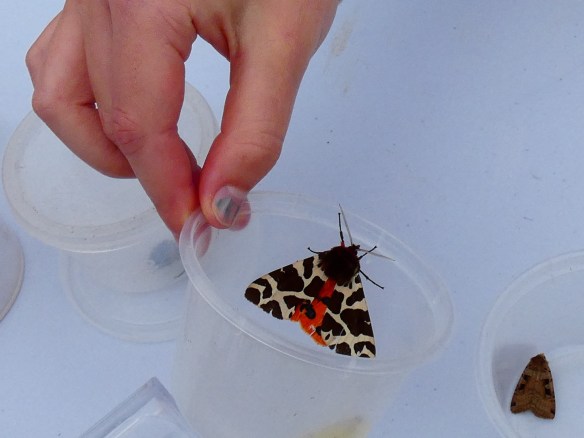
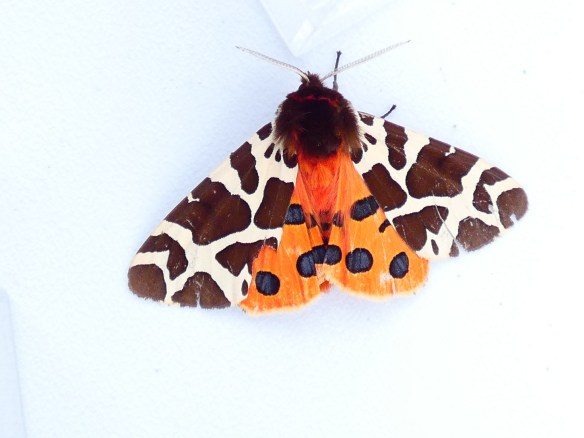
A personal favourite is the Burnished Brass moth. Both moths and butterflies belong to an order called ‘lepidoptera’, which means ‘scaly wings’. Ever tried to handle a moth, maybe to evict it from the house? You probably noticed that there was moth dust everywhere. This would have been scales, shed from the wings and it is these scales which give moths – and butterflies – all the colours and patterns on their wings. Depending on how the light catches them, they can even look like polished metal – pretty impressive!
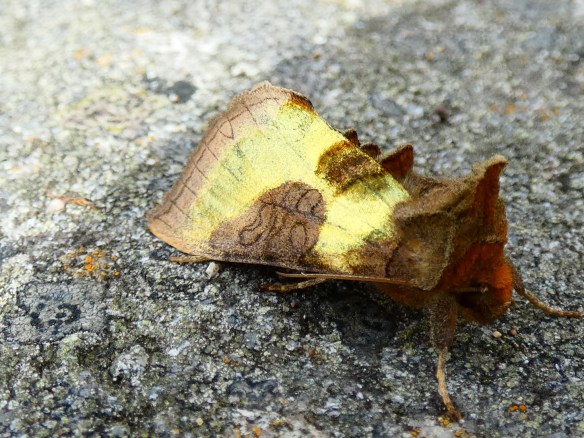
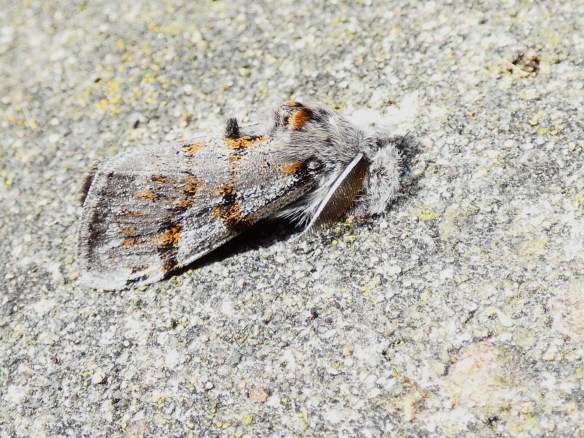
The variety of shapes and colours just seems endless, and here’s a sample of a few other species we had in the moth trap.
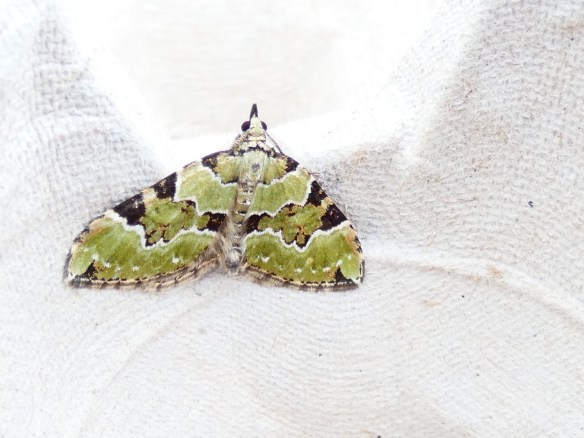
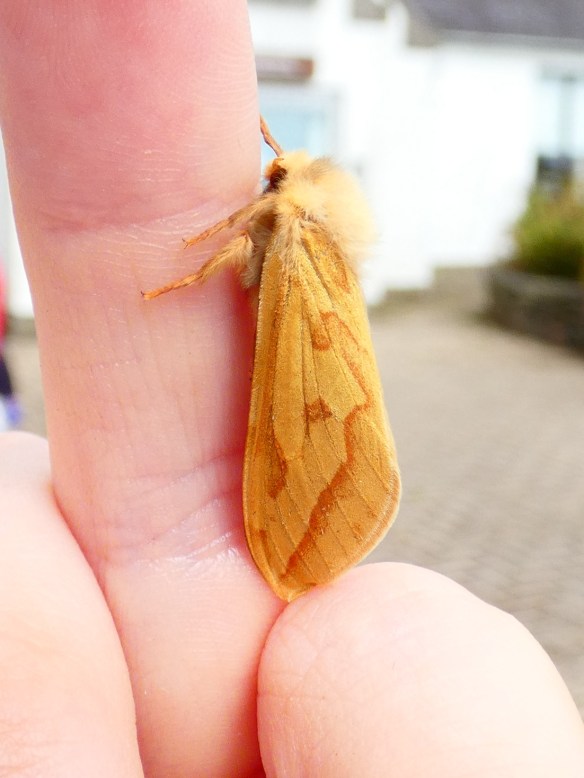
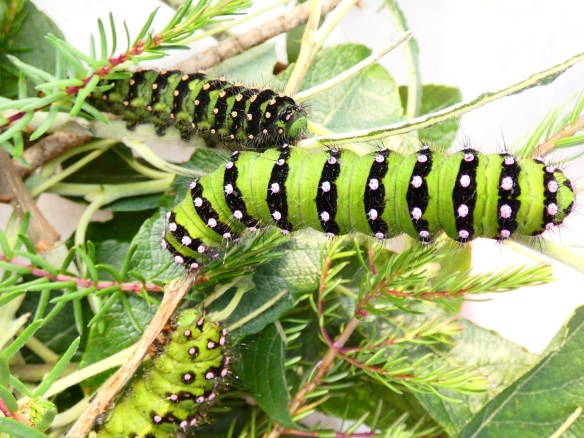
Of course, many of us probably encounter butterfly and moth life cycles at an early age, with books like ‘The Very Hungry Caterpillar’. Well, we also had some impressively hungry caterpillars to show everyone, the startlingly green-and-black striped Emperor Moth caterpillars. Resembling nothing so much as miniature motorised gherkins, these finger-sized caterpillars were almost ready to pupate. They turn into a large and beautiful moth which only lives for about a week – remarkably, the adults have no mouthparts, so can’t actually feed – so they have to do all their eating as caterpillars!
In fact, I suspect a lot of us encountered insects more when we were younger, not only because we were shorter and nearer the ground to see them, but because children are often just interested in ‘beasties’. After we emptied the moth traps, we went for a minibeast hunt and I think the staff enjoyed it as much as the children!
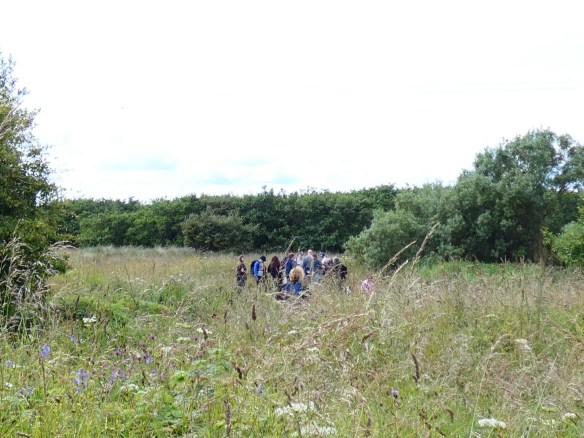
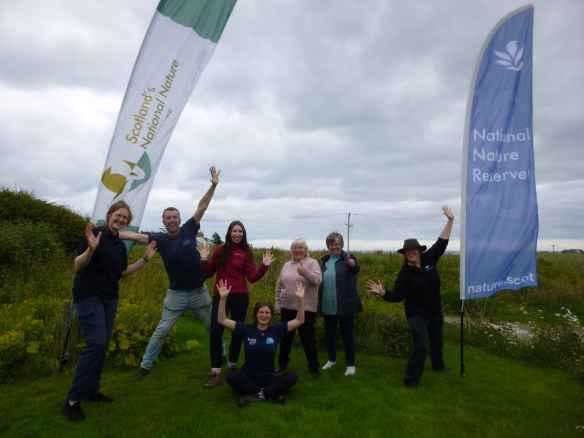
We’ve actually had a pretty busy week for events, with our Fun Day last week, a gardening-for-wildlife talk on Tuesday and then the moth morning… lots of people, lots of chat, and always great to see and hear folk enthusing about nature. The next event coming up here is the Incredible Invertebrates Minibeast Hunt being led by Caitlin from Buglife – maybe see you there!
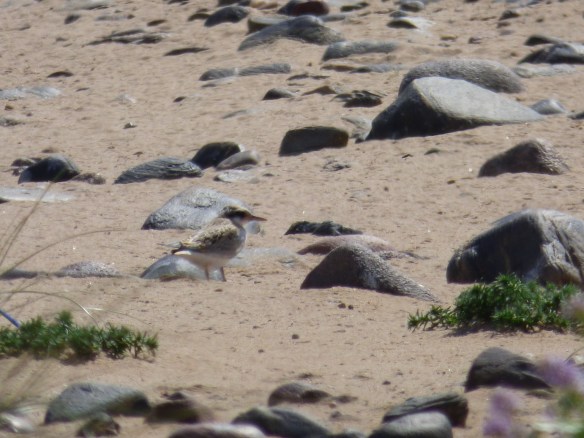
Away from the people-oriented site of the job, life on the reserve is also proceeding at a frenetic pace. It’s getting quieter down at the ternery now, with may of the young having fledged and left the estuary. But, on a positive note, we do have to print a correction from last week’s blog….a count of ‘commic’ (Common and Arctic tern fledgers) also turned up one Little Tern fledgling. Goodness knows where it has been hiding but at least it has managed to avoid getting eaten! The appearance of this sole survivor was met with some colourful language on the part of the Reserve staff, along the lines of “where the sam hill did you come from?!”
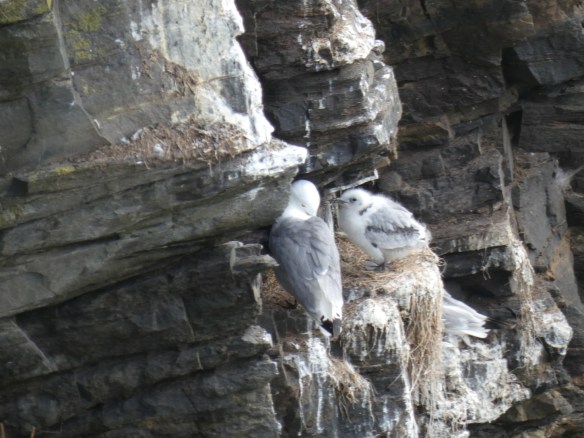
The cliff-nesting seabirds are usually later in the year than the ground-nesters to fledge. Guillemots seem to have had a really poor year and we know the numbers of Kittiwakes are down too (both probably as a result of bird ‘flu last year). But, on the plus side, good numbers of those Kittiwakes that have actually nested this year seem to have half- to two-thirds-grown young.
We could also see a couple of fat Fulmar chicks on ledges, too. These are the slowest-growing of any of the birds that breed here and it will take a Fulmar chick about seven weeks from hatching to its first flight. By contrast, all of our terns and gulls will do this in a month or less…but, then again, it’s a lot more dangerous nesting on the ground than on a cliff, and the quicker you can fly, the better!
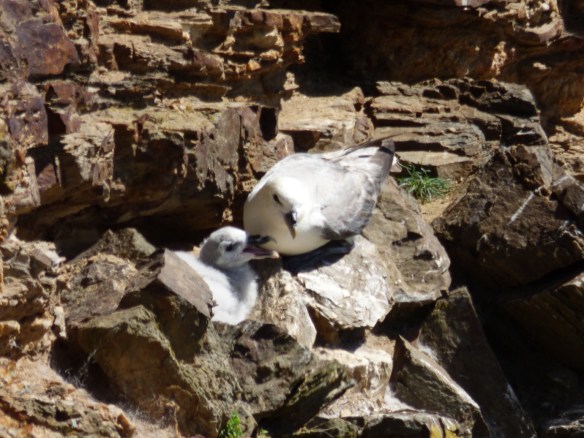
What a contrast between the frenetically-fast life-cycle of the moths, buzzing through life at 100 mph, and the laid-back and languid pace of life lived by Forvie’s Fulmars. During this period of midsummer mayhem, I know whose lifestyle I would prefer given the choice!
 Forvie National Nature Reserve